
Senseable Cities with Fábio Duarte
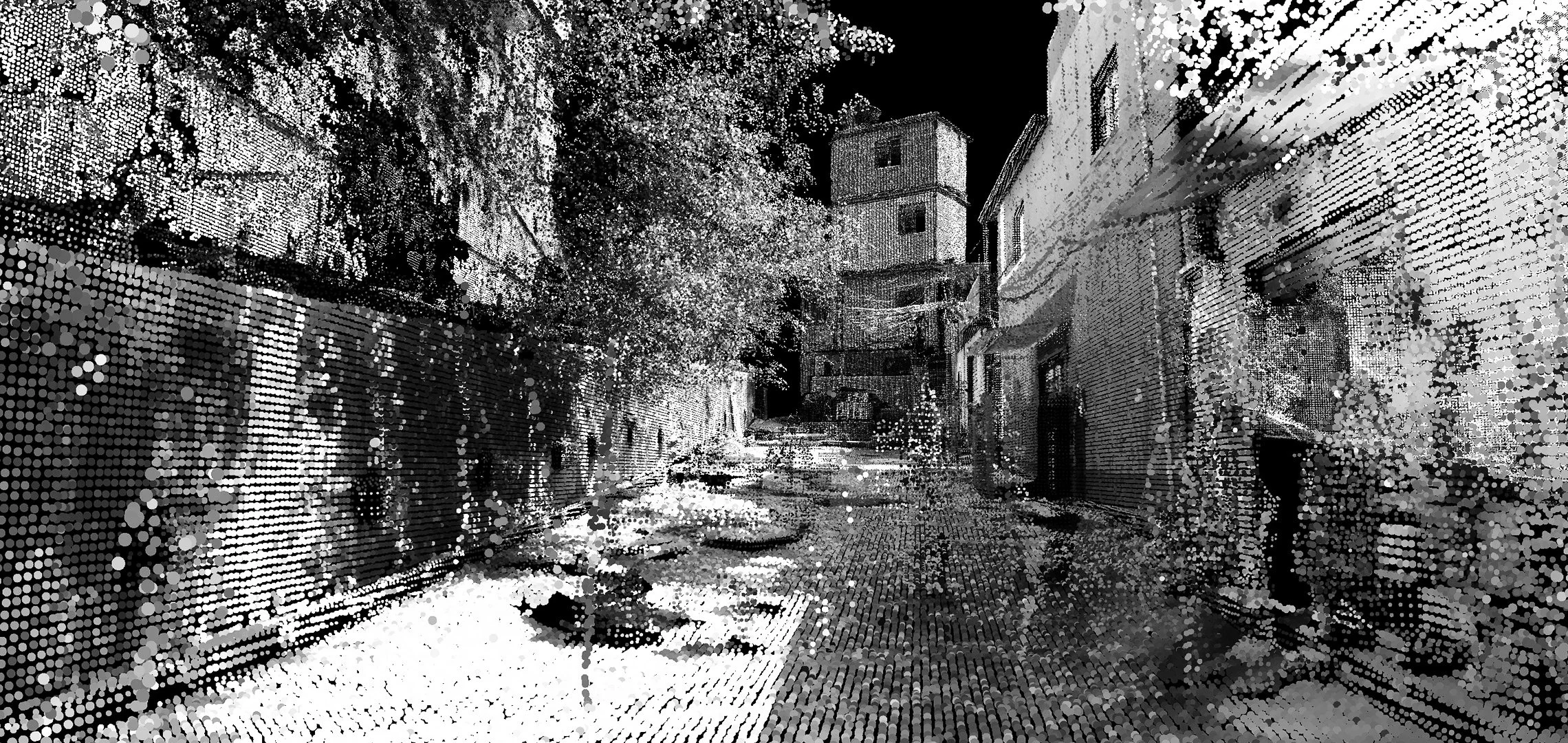
This episode of the Super Urban Podcast turns to the city as a live, legible system — one that can be continuously read, measured, and acted upon in real time. The concept of the 'senseable city', as developed through the work of the MIT Senseable City Lab, is presented not simply as a technological proposition, but as a fundamental shift in how we understand, describe, and design urban environments. As layers of sensors, networks, and data settle over urban space, the city ceases to be something we merely represent — it becomes something we can sense, interpret, and respond to as it unfolds.
The conversation moves across a series of related provocations: the tension between legibility and overload as data multiplies; the question of who this new visibility actually serves — citizens, governments, or the algorithms increasingly acting on their behalf; and the implications of a shift from long-term planning toward continuous, real-time adjustment. The Lab's prototypical projects are framed as a particular mode of practice — neither purely speculative nor fully deployed — that makes new urban possibilities visible and tangible before they are absorbed into everyday infrastructure. Alongside this, the episode surfaces the ethical dimensions of the datafied city: questions of ownership, power, and the risk that sensing infrastructures, however neutral in appearance, may quietly reinforce existing structures of control.
The episode closes by holding open a space for uncertainty within the increasingly knowable city. If friction, delay, and unpredictability have historically generated social and cultural life, the question becomes: what should resist optimisation? As the city begins to resemble a feed — constantly refreshed, continuously informing and responding — the conversation asks whether anything can, or should, remain outside the system. It is a question as much about values as about technology, and one that sits at the heart of contemporary urban practice.
SUP is hosted by Ian Nazareth, Graham Crist and Christine Phillips.
This podcast is produced with support from the Alastair Swayn Foundation and the RMIT University School of Architecture & Urban Design.
We acknowledge the people of the Woi wurrung and Boon wurrung language groups on whose unceded Country we are recording this podcast.
Show Notes
People + Teams
Global Case Studies
The London Underground – brief history
In Pictures: Evolution of the London Tube Map
Instant City (Speculative project by Archigram, 1960s)
Senseable City Amsterdam (Senseable City Lab, 2022)
Roboat (Senseable City Lab, 2016-2021)
Senseable City Rio (Senseable City Lab, 2021 – ongoing)
Theories + Planning
Article on Smart and Senseable Cities
Literature + Critical Perspectives
On Exactitude in Science (Jorge Luis Borges, 1946)
Urban Play: make-believe, technology, and space (Fábio Duarte, 2021)
Unplugging the city: the urban phenomenon and its sociotechnical controversies (Fábio Duarte, 2018)