
Cities as Manifestos with Reinier de Graaf
What happens when architecture turns its critical attention towards itself?
Architecture has always been a discipline of competing ambitions and contradictions. It promises permanence while operating within cycles of obsolescence; claims cultural and political agency while remaining deeply entangled with capital; and presents itself as a public profession while much of its work is organised around private commissions and commercial interests. In this episode, we speak with Reinier de Graaf, architect, writer and partner at the Office for Metropolitan Architecture (OMA), about these contradictions and the possibility of architecture reclaiming a more consequential role in the world.
The conversation takes its starting point from de Graaf's latest book, Architecture Against Architecture: A Manifesto. Where architectural manifestos have traditionally announced new styles, movements or visions for the built environment, de Graaf turns the instrument towards the discipline itself. The manifesto becomes an inventory of architecture's internal conditions: its labour structures, professional conventions, systems of ownership and authorship, and its entanglement with the economic and political arrangements that shape the built environment. It is both a critique and a call to action. What would architecture need to become if it were to recover its capacity to act?
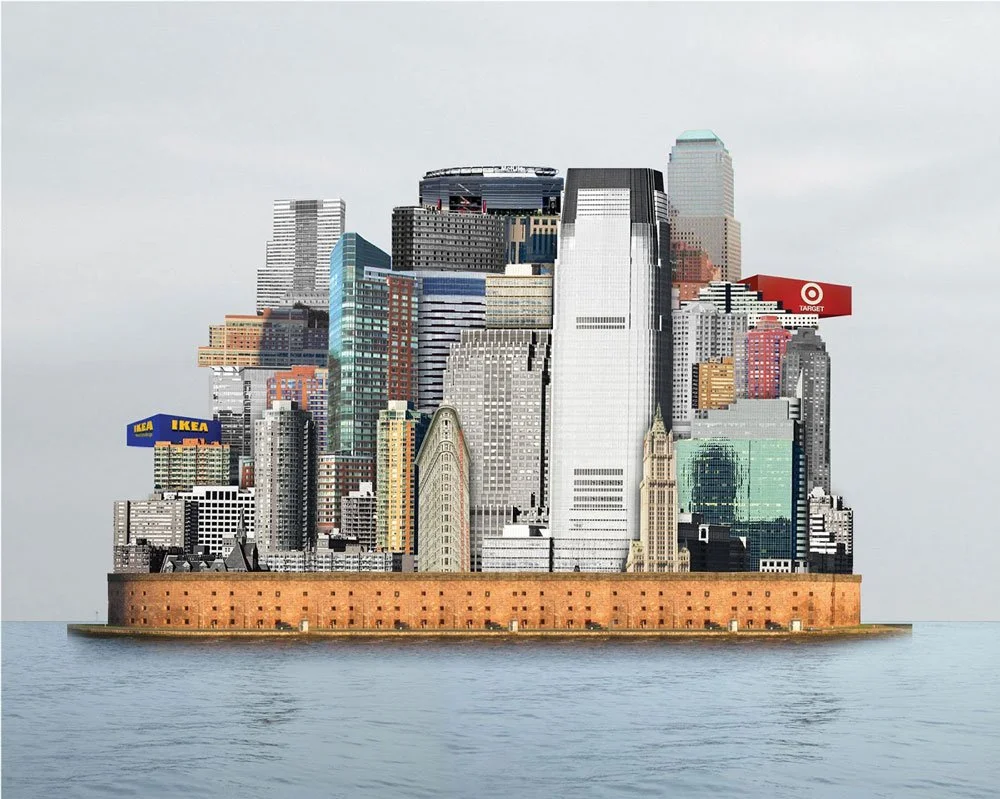
We begin with Phantom Urbanism, de Graaf's research into forms of urbanisation that continue to be planned, financed and built despite uncertain relationships to occupation, use or demographic need. Here, the city can acquire a momentum of its own, with buildings, infrastructure and entire districts produced as vehicles for capital, speculation and economic growth. This raises a fundamental question about architectural agency: how can the discipline change its relationship with the world without confronting the systems through which it operates?
From the city, we turn to the profession. We discuss architectural labour, unionisation and the tension between protecting the rights of workers and preserving the broader responsibilities of professional judgement and accountability. We consider alternative models of practice based on collective ownership and governance, and question the authority traditionally invested in the individual architectural figurehead. What might a more collectively organised profession look like, and how might it recover a capacity to operate beyond the role of commercial consultancy?
The conversation then considers architecture as a form of politics in its own right. Much of the most consequential decision-making about cities takes place before the architect enters the project, through planning, policy, finance and procurement. Drawing on de Graaf's work with OMA and AMO, we ask how architectural thinking might intervene in these larger systems, and whether the discipline can move beyond the building commission and the developer's brief.
We also examine the conventions of authorship and ownership, including the possibility of engaging with land through relationships of custodianship rather than property. In Unlearn Vitruvius, de Graaf challenges the traditional understanding of architectural permanence and robustness. In an age of material scarcity and accelerating obsolescence, might the value of a building lie as much in the future lives of its materials as in the endurance of the structure itself? The Roman practice of spolia, recovering and incorporating materials into new buildings, offers another way to think about architectural responsibility.
Finally, we extend the discussion to the Anthropocene and the territorial scale of architectural practice. From energy landscapes and infrastructure to the extraction and movement of resources, the systems shaping our environments exceed the boundaries of the individual building or site. We ask what architects can contribute to these conversations, and whether architecture needs to reconsider not only what it builds, but the conditions under which building takes place.
A manifesto is an act of declaration: it makes conditions visible, takes a position and proposes the possibility of change. Architecture Against Architecture asks the profession to turn that instrument upon itself. The challenge is to distinguish architecture as an industry, architecture as a profession and architecture as a form of political and cultural agency.
Can architecture reorganise its own structures, recover its capacity to shape the conditions under which we live, and become more than an industry that delivers buildings? As de Graaf suggests, perhaps architecture's most consequential invention is not the building itself, but the consciousness through which we understand and shape the world.
SUP is hosted by Ian Nazareth, Graham Crist and Christine Phillips.
This podcast is produced with support from the Alastair Swayn Foundation and the RMIT University School of Architecture & Urban Design.
We would like to thank the Australian Institute of Architects for connecting us with Reinier, and OMA for making this conversation possible.
We acknowledge the people of the Woi wurrung and Boon wurrung language groups on whose unceded Country we are recording this podcast.
People
Organisations and Initiative
Projects and Works
Live Forever: The Return of the Factory
Theories and Ideas
The city as a project
The city is understood as the result of political intention and specific architectural decisions rather than neutral or spontaneous growth.
Architecture and urbanisation
Aureli distinguishes finite architectural form from urbanisation as an expansive economic and infrastructural process.
Form as limit
Architectural form gains political force by establishing boundaries, separations, and common structures within the continuous space of the city.
Autonomy as a project
Autonomy is framed not as isolation from society, but as the capacity to establish a position and act critically within existing political and economic conditions.
Typology and repetition
Recurring types and repeated elements offer a way to organise collective life while resisting architecture's reduction to novelty or image.
Living and working
Dogma questions the separation of domestic and productive space and explores how housing might support collective forms of labour, care and social reproduction.
Drawing and representation
Plans, diagrams and collages operate as analytical and projective tools through which architecture can construct arguments about the city.
Teaching as practice
Mentorship, criticism, and education are positioned as integral to architectural work rather than separate from design practice.
Additional Reading
The Possibility of an Absolute Architecture
Less Is Enough: On Architecture and Asceticism
Dogma 2002-2021: Familiar / Unfamiliar
Stay Connected
DOGMA: A Talk by Pier Vittorio Aureli and Martino Tattara