
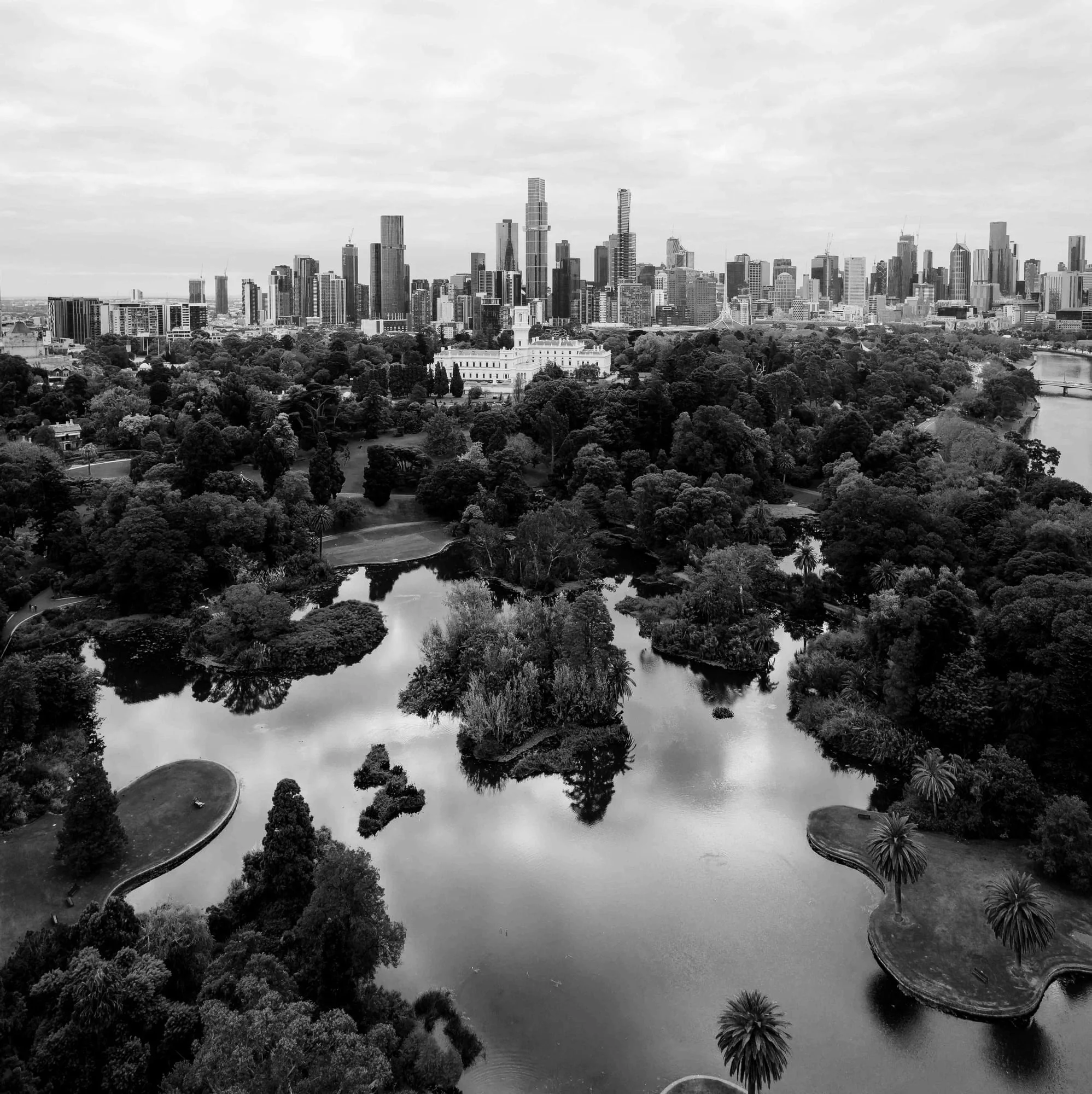
Naarm/Melbourne with Gary Presland
As we walk around the built-up cities of today, it is easy to forget that nature laid the groundwork long before the first brick was laid. Ancient volcanic eruptions shaped the land and waterways we now build around, and these deep-time forces still influence where we place our cities—and how they grow. In this episode, we dive into the deep history of Melbourne—also known as Naarm—with Dr Gary Presland, who quite literally wrote the book on the subject: The Place for a Village: How Nature Has Shaped the City of Melbourne.
Long before skyscrapers and laneways, this was Kulin Nation land—home to the Boon Wurrung and Woi Wurrung peoples, who cared for its rivers, grasslands, and volcanic plains for tens of thousands of years. The city as we know it was laid out in a grid beside the Birrarung—what many know as the Yarra River. Dr Presland is a non-Indigenous Melbourne-based writer and historian who studied history at La Trobe University and archaeology at the University of London, with major research interests in the Aboriginal and natural history of the Melbourne region.
In an era of climate crisis, we are waking up to just how powerful the relationship between nature and city still is. As natural environments become increasingly altered—sometimes beyond recognition—nature continues to exert a powerful influence on the shape and size of cities. This conversation invites us to remember the deep-time forces beneath our feet, and to consider what a more ecologically attuned urbanism might look like.
SUP is hosted by Ian Nazareth, Graham Crist and Christine Phillips.
This podcast is produced with support from the Alastair Swayn Foundation and the RMIT University School of Architecture & Urban Design.
We acknowledge the people of the Woi wurrung and Boon wurrung language groups on whose unceded Country we are recording this podcast.
Show Notes and References
Text References
The Place for a Village: how nature has shaped the city of Melbourne -
Aboriginal Melbourne: The Lost Land & Landscape of the Kulin People
For God's sake send the trackers : a history of Queensland trackers and Victoria Police
First People: The Eastern Kulin of Melbourne, Port Phillip & Central Victoria
People
Theories and Ideas